
10 Driving Habits That Damage Your Car
03.03.2025
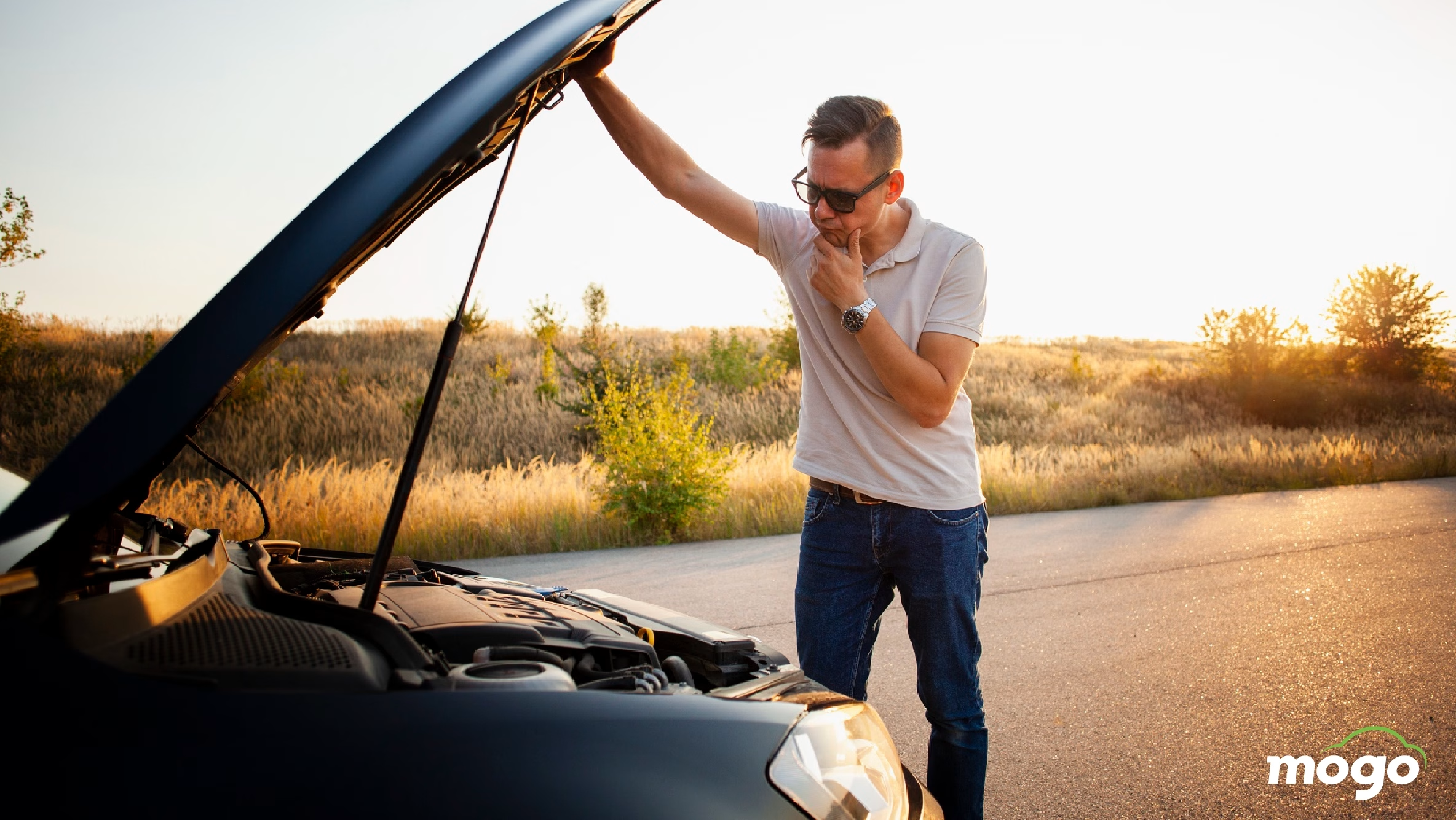
Bad driving habits are everyday actions that drivers often pay no attention to, yet over time they gradually damage the engine, the brakes, the tires, and other components of the car.
Caring for your car and driving it correctly is a decisive factor in its long and smooth functioning. However, a car's condition does not depend on technical service alone - everyday driving habits often have a greater impact on the state of the car than we think.
Some harmful habits, which drivers often do not even realize, seem insignificant at first glance, yet over time they cause expensive damage. In this article we will look at the mistakes you should avoid so that your car serves you for a long time and without problems.
1. Overloading the car
How much weight can your car carry? - having an answer to this question is essential, because a constantly overloaded car accelerates the wear of the engine, the suspension system, and the tires. Moreover, an overloaded car endangers the lives of the driver, the passengers, and other people in the event of a road accident or an extreme situation.
Advice: To avoid overloading, check the manual or the label on the driver's door, where the maximum permissible weight is indicated.
2. Ignoring the dashboard signals
Ignoring the flashing or light warning signs on the car's dashboard is unacceptable. These indicators are a kind of "language" of the car - through them the car tells us that there is some malfunction in a system and that it needs attention. Each sign has its own meaning and, most likely, provides information about a different problem:
- Engine malfunction - the so-called "Check engine" signal, which points to various faults;
- Low oil level or pressure - a problem with the engine's lubrication system;
- A braking system problem - a fault with the brakes or the brake fluid;
- An overheated engine - the temperature rising above a dangerous limit;
- A drop in tire pressure (TPMS) - insufficient pressure in one or more tires;
- Battery problems - a fault with the charging system or the battery.
If you do not respond to these indicators in time, a minor fault may develop into serious and expensive damage. Red-colored signals are especially dangerous - they require an urgent response.
Advice: If a red indicator lights up, safely stop the car and consult a specialist; in the case of a yellow sign, have a diagnostic check carried out as soon as possible.
3. Warming up the engine at high revs
Many drivers believe that running at high revs is necessary to warm up a cold engine quickly, but this practice damages the engine. When the engine is cold, the oil needs time to reach all the moving parts fully. Using high revs at this point increases the wear of the components and shortens the engine's lifespan. The best option is to leave the car running quietly for 20-30 seconds and then set off at a slow pace. During the first 15-20 minutes, refrain from sharp acceleration and high revs.
Advice: During the first few minutes, drive quietly and avoid high revs.

4. Driving the car with a minimal fuel level
When the fuel level is constantly minimal, the car faces additional risk. Especially in cars with diesel engines, the fuel pump is cooled and lubricated precisely by the fuel - and under low-level conditions the pump "draws in" air, overheats excessively, and over time becomes damaged.
In addition, sediment and impurities accumulate at the bottom of the tank over time, which at a low level easily get into the fuel system and damage the filter or the injectors. Frequently starting the engine with a small amount of fuel also puts additional strain on the ignition system.
Advice: Try not to let the fuel level drop below a quarter of the tank - this protects the pump from overheating and the injectors from sediment.
5. Incorrect use of the gearbox
Using the gearbox incorrectly causes it to wear out prematurely. In cars with automatic gearboxes, it is especially important to bring the car to a complete stop when switching between Reverse and Drive modes. If the car is still moving even slightly when changing gear, this puts excessive strain on the gearbox and damages the mechanisms.
Advice: on an automatic, bring the car to a complete stop before switching, and on a manual, return both hands to the wheel after changing gear.
6. Resting your hand on the gear lever
Some drivers claim that keeping your hand constantly on the gear lever has a bad effect on the gearbox itself. It is difficult to confirm the truth of this view, but with certainty one can only say that if the driver holds the wheel with just one hand while driving, the risk of a road accident increases.
Advice: keep both hands on the wheel while driving - this gives you better control over the car and reduces the risk of an accident.

7. Driving in traffic jams
Driving in traffic jams with a car that has a manual gearbox is hell for every driver, since you constantly must shift from gear to gear. In such cases, drivers often prefer to keep the clutch (also known as „tseplenia“) permanently disengaged. After all, changing gears is faster that way, isn't it?! However, here you should remember that disengaging the clutch more than necessary puts it out of order and, accordingly, damages it.
Advice: press the clutch pedal only now of changing gear; while standing in a traffic jam, put the car in neutral and take your foot off the pedal.
8. Going over speed bumps quickly and ignoring obstacles on the road
Speed bumps, which are often known as "lying policemen", are installed in places where reducing speed is necessary to ensure safety. Going over them quickly not only endangers pedestrians and other drivers, but also damages the car's suspension system, the tires, and the running gear.
Other obstacles on the road act on the same principle. Hitting a pothole at high speed or striking a curb is one of the main causes of damage to the bearings, the rims, the tires, and the steering system. Even a single rough impact is enough to bend a rim, cause a bubble on a tire, or throw off the geometry (alignment).
Advice: Go over speed bumps and uneven stretches slowly, at a braked pace; watch the road surface in advance and avoid obstacles as much as possible.
9. Sharp braking
Frequent and sharp braking quickly wears out the brake pads and discs and also damages the suspension system. The higher the speed, the more brakes we have to apply in order to bring the car under control. Apart from the fact that sharp braking is dangerous, an abnormal load is also placed on the braking system at such times.
Advice: Keep a safe distance from the car in front and brake in advance, gradually - this protects the braking system and reduces fuel consumption.

10. Neglecting to use the handbrake when parking
Using the handbrake is essential not only when parking on a slope, but also on a level surface. If it is neglected, the entire weight of the car presses onto the small parts of the gearbox, which over time causes its wear and damage. Using the handbrake correctly promotes the car's stability and the long-term functioning of the gearbox.
Advice: On a slope, apply the handbrake first and only then switch to Park mode - this way the entire load falls on the brake and not on the gearbox.
Conclusion
For the long and trouble-free operation of a car, quality fuel and timely servicing alone are not enough. The culture of everyday driving and correct habits are just as important as technical maintenance. Small changes in your behavior will help you avoid expensive repairs and keep your car in good condition for years.
Whether you're maintaining your current vehicle or planning to buy another one, good driving habits will help any car last longer. If you're looking for your next vehicle, explore Mogo's car leasing options to find a financing solution that suits your needs.
Frequently Asked Questions (FAQ)
1. How often should we check the technical condition of the car?
Specialists recommend a full technical inspection of the car at least once a year or after the mileage specified by the manufacturer. Oil and filters, meanwhile, should be changed regularly.
2. Is warming up the engine necessary?
Modern cars do not need a lengthy warm-up, but quiet driving during the first few minutes after starting is recommended so that the oil can circulate fully through the system.
3. Does aggressive driving damage the car?
Yes. Frequent sharp acceleration and braking accelerate the wear of the engine, the transmission, the brakes, and the tires, which is associated with additional expenses in the future.
4. Why is it not recommended to run the fuel tank completely empty?
A low fuel level increases the risk of the fuel pump overheating and promotes the entry of the sediment present in the tank into the system, which has a negative effect on the engine's performance.
5. Is using the handbrake necessary in a car with an automatic gearbox?
Yes. Using only the „P“mode creates additional load on the transmission mechanisms, while using the handbrake significantly reduces this load.