
Vehicle Noise Regulation in Georgia: The 80-Decibel Limit and Fines
09.10.2026
Since January 1, 2026, vehicle noise in populated areas of Georgia must not exceed 80 decibels during nighttime hours (23:00–08:00). The patrol police now check this with a special portable sound level meter, and violators face fines of 100 to 300 GEL plus penalty points on their driver's license.
This regulation has become one of the most discussed topics among Georgian drivers. Its predecessor, the 2025 “muffler law,” which landed many cars in impound lots, has already drawn sharp criticism from many.
In this article, the Mogo team explains what the new rule establishes, how inspections are carried out, what fines apply, and why it has split the public into two camps.
The 80-Decibel Limit: What the New Rule Establishes
The standard was introduced by Resolution No. 584 of the Government of Georgia dated December 25, 2025, and entered into force on January 1, 2026. The resolution sets the maximum level of noise a vehicle may produce during operation.
|
When and where |
Maximum permitted noise |
|
At night (23:00–08:00), in populated areas |
80 decibels |
|
During the day in populated areas |
Technical inspection standards |
|
At night outside populated areas (on highways, international and domestic roads) |
Technical inspection standards |
The rule applies to categories M, N, O and L, meaning passenger cars and trucks, buses, trailers, and motorcycles. The exception is sports vehicles when they are driving in an approved area, such as a race track.
For comparison: 80 decibels is roughly the sound of shouting or an old truck engine. An ordinary car fitted with a factory muffler usually does not exceed this limit.
How the Patrol Police Measure Noise
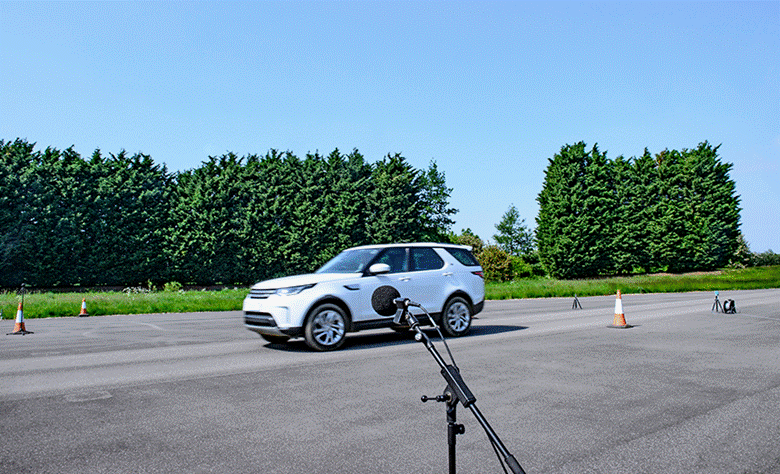
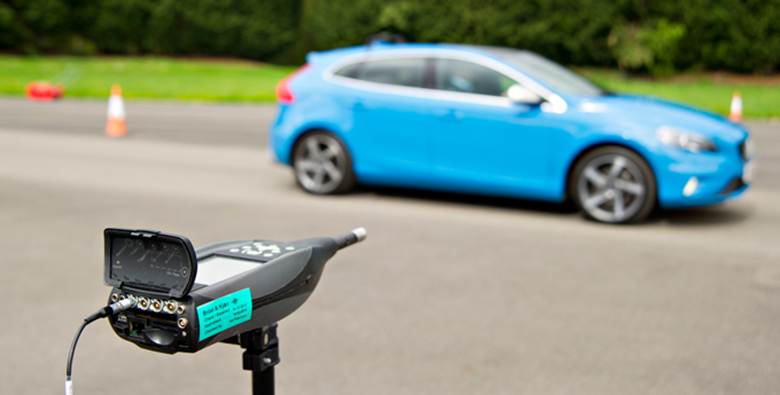
At the end of September 2026, the Ministry of Internal Affairs announced that its authorized units will check noise right on the road, under traffic conditions. The main principles of the inspection are:
• Certified device - a portable sound level meter kit compliant with the international standard ISO 5130:2019 is used;
• Reasonable suspicion - a car is checked when there are sufficient grounds to assume that its noise exceeds the limit;
• Calibration - the device must be calibrated in the manner established by law;
• Detailed procedure - the measurement procedure is set out by an order of the Minister of Internal Affairs.
This is an important change: until now, the patrol police relied mainly on visual assessment, whereas now decisions are backed by a specific number.
What Is the Fine for Exceeding the Vehicle Noise Limit?
A driver may face two types of sanctions: one for exceeding the measured noise limit, and the other for an arbitrarily modified muffler.
|
Violation |
Fine |
Driver's license points |
|
Noise above the limit - first offense |
100 GEL |
−10 |
|
Noise above the limit - repeat offense |
200 GEL |
−20 |
|
Noise above the limit - third and subsequent offenses |
300 GEL |
−30 |
|
Arbitrarily modified (non-factory) muffler |
200 GEL |
−30 |
The impound lot is tied specifically to the muffler rule. Since July 2, 2025, a car with a non-factory muffler is considered arbitrarily modified. In such cases, a police officer may remove the driver from driving and have the vehicle transferred to a special impound lot.
When Can a Car Be Taken to an Impound Lot?
If the police determine that a vehicle has an arbitrarily modified, non-factory muffler, they may remove the driver from driving and have the vehicle transferred to a special impound lot. This violation carries a fine of 200 GEL and a 30-point deduction from the driver's license.
If the driver believes the vehicle has not been arbitrarily modified, they can confirm this through an appropriate expert examination. Deadlines for the examination and for submitting documents should be clarified in advance with the relevant agency.
Advantages of the Regulation
The regulation's initiators say that despite existing noise rules, vehicle noise remained one of the population's main problems, especially at night. The main advantages of the new rule are:
• Quiet nights - nighttime “races” and loud mufflers are a frequent subject of residents' complaints in densely populated neighborhoods of Tbilisi, Batumi, and Kutaisi;
• Objective criterion - the sound level meter replaces subjective judgment with a number, which protects law-abiding drivers;
• Health - nighttime noise disrupts sleep and increases stress levels;
• European practice - measuring vehicle noise in decibels has long been the standard in Europe.
Disadvantages and Public Reaction
The regulation, especially its 2025 “muffler” part, caused dissatisfaction among a large share of drivers. On social media, drivers wrote that even cars with factory exhaust systems ended up in impound lots, and a protest rally was announced for July 20, 2025.
The critics' main arguments are as follows:
• Subjective assessment - before sound level meters were introduced, the patrol police judged whether a muffler was “factory” by eye;
• Even visual changes are penalized - fines were sometimes issued even for mufflers that had only been changed cosmetically and had no effect on the sound;
• Import specifics - a large share of cars in Georgia are imported from the USA, where tuning is permitted in some states, so even a “factory” car may be noisy;
• Harsh sanctions - the impound lot, the cost of an expert examination, and the 10-day deadline mean a lot of time and money for the driver.
The Vice President of the Automobile Federation, Mevlud Meladze, noted that the problem could have been solved with an inexpensive sound level meter. This is exactly the demand reflected in the 2026 amendment, although restoring trust will likely take time.
Other Noise Rules That Also Apply to Drivers
Besides vehicle noise, Georgia has a general rule on noise in residential buildings (Article 77¹ of the Code of Administrative Offences):
• In a living room, 35 decibels are permitted during the day and 30 decibels at night;
• The fine for an individual starts at 150 GEL and rises to 1,000 GEL for repeat offenses;
• Since April 2025, noise from pyrotechnics has also been subject to this rule.
In practice, this means that loud music played from a car in an apartment building's courtyard at night may be assessed under this very article.
What Drivers Should Do to Avoid the Impound Lot
1. Keep the factory muffler - this is the best insurance against both fines and the impound lot.
2. Keep your documents - if you replaced the muffler, carry the original, or the receipt and description of a certified part, with you.
3. Check the condition of your muffler - a damaged or leaking muffler makes more noise than a factory one. Beyond avoiding fines, regular car maintenance is important for spotting potential problems early and making your driving safer and more comfortable.
4. Be careful at night - after 23:00, avoid sharp acceleration and “revving” the engine in the city.
5. If your car is leased - review the terms of your agreement and contact the company before making any technical changes to the vehicle.
Conclusion
Vehicle noise regulation in Georgia is taking shape step by step: the muffler rule took effect in 2025, and in 2026 the 80-decibel limit and portable sound level meters were added. On the one hand, this responds to the demand for quiet nights; on the other, drivers' trust has yet to be restored.
At Mogo, we believe that comfortable driving and respect for your neighbors are not mutually exclusive. Factory settings and responsible driving are the simplest way to keep your car on the road and not in an impound lot. If you want to buy a car that won't cause noise or become a source of any problems, you can take advantage of Mogo leasing.
Frequently Asked Questions
How many decibels are allowed for a car at night?
- In populated areas from 23:00 to 08:00, a maximum of 80 decibels.
What is the fine for a noisy car?
-100 GEL and 10 points for a first offense, 200 GEL and 20 points for a repeat offense, and 300 GEL and 30 points for a third offense.
Can my car be taken to an impound lot?
-Yes, if the patrol police consider the muffler to be arbitrarily modified. The driver has 10 days to prove otherwise through an expert examination.
Does the rule apply during the day?
-During the day, technical inspection standards apply, while the 80-decibel limit covers nighttime hours.
This article is for informational purposes only and does not constitute legal advice.
Sources: Government Resolution No. 584 · Ministry of Internal Affairs statement on noise checks · The muffler rule and criticism